ROM is "built-in" computer memory containing data that normally can only be read, not written to. ROM contains the programming that allows your computer to be "booted up" or regenerated each time you turn it on. Unlike a computer's random access memory (
RAM), the data in ROM is not lost when the computer power is turned off. The ROM is sustained by a small long-life battery in your computer. (
ROM) is a type of
non-volatile memory used in
computers and other electronic devices. Data stored in ROM can only be modified slowly, with difficulty, or not at all, so it is mainly used to store
firmware (
software that is closely tied to specific
hardware and unlikely to need frequent updates).
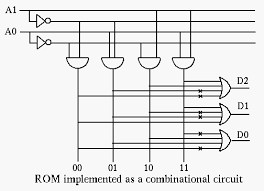
Strictly,
read-only memory refers to memory that is hard-wired, such as
diode matrix and the later
mask ROM (MROM). Although discrete circuits can be altered in principle,
integrated circuits (ICs) cannot and are useless if the data is bad or requires an update. That such memory can never be changed is a disadvantage in some applications. More recently,
ROM has come to mean memory that is read-only in normal operation, but a technician using special equipment can erase or reprogram to updating firmware or to correct an error.


No comments:
Post a Comment